Nisswa looked at the same mini roundabout for two intersections and made opposite calls. At Church Street and Lakers Lane, by Nisswa Elementary, the traffic circle stays in the plan. At Main Street and City Hall Street, the corner most downtown visits pass through, the city dropped it.
The two corners have different problems. By the school, the trouble is vehicles and school buses lining up in front of the building. Engineers said a circle at Church Street would avoid conflicts with that line, and its center would be raised only 3 to 4 inches so buses can drive over it. Downtown, the trouble is pedestrians crossing at unpredictable spots on busy days. Most of the 2027 downtown street project follows from that difference. The project is still at the drawing stage, with bidding set for February.
The Corner That Kept Its Corners
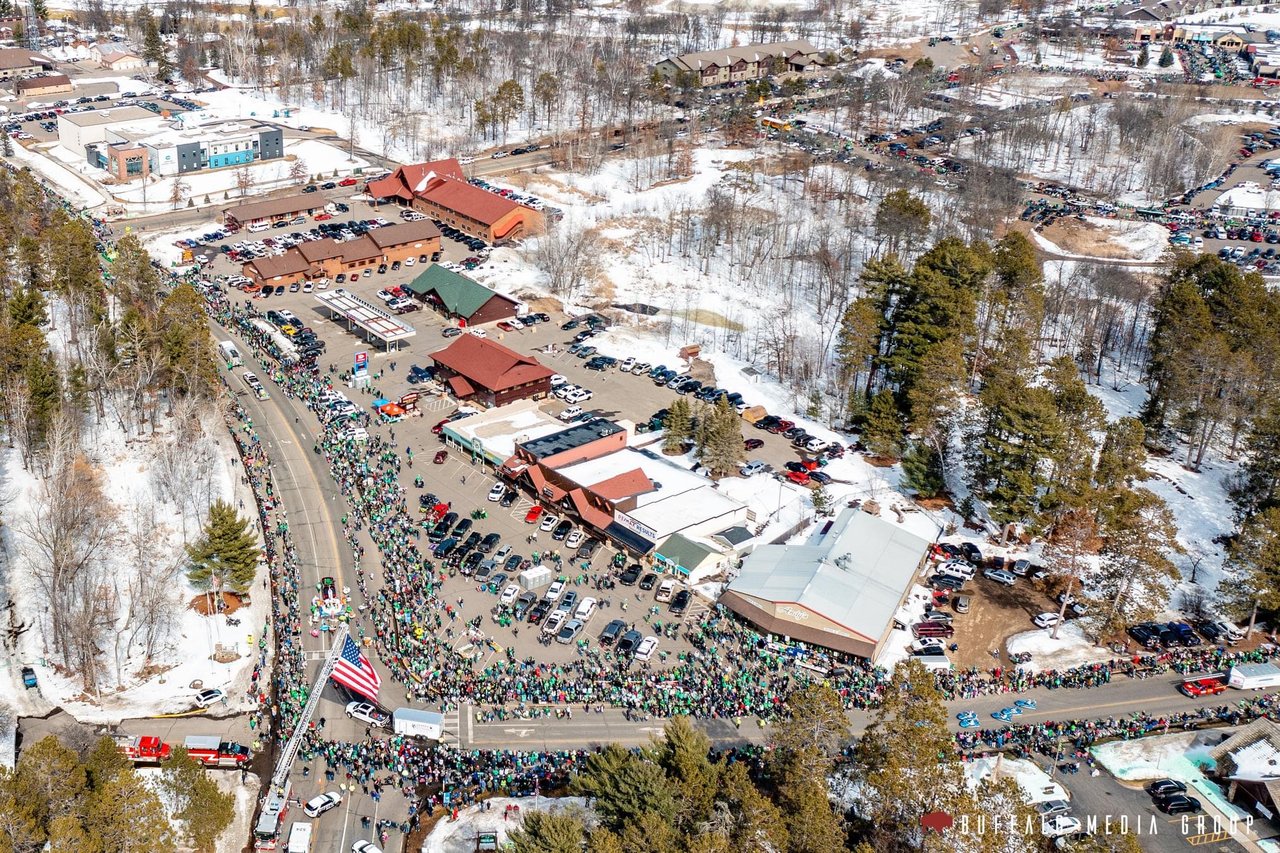
Widseth, the city's engineering firm, studied two designs for Main Street and City Hall Street. One was a conventional intersection with traffic channelization and pedestrian refuge islands. The other was a mini roundabout. City Engineer Dave Reese told the Public Works Committee on May 11, 2026 that business owners, the historical society and the operators of The Pickle Bar had largely opposed the circle. He also said a roundabout's required turning radii would remove more parking stalls.
The engineers recommended narrower travel lanes, set turning movements and refuge islands to shorten a crossing that measures about 80 feet today. Stakeholders had flagged erratic driving at the corner as a safety concern. A resident who works in planning and zoning said the intersection's width invites U-turns.
Committee Member Dil Stachour gave the clearest reason for the choice. According to the May 11 committee minutes, he said he generally likes roundabouts. Downtown Nisswa is different, he said, because people cross at unpredictable spots on busy days, and a circle where traffic never stops moving doesn't fit that. Council Liaison Jesse Zahn and the rest of the committee backed the conventional design.
Why the Circle Ended Up at the School
The traffic circle at Church Street and Lakers Lane wasn't the first idea. The city also explored sending school buses through a private parcel that connects School Street to Main Street, and that landowner declined. According to Zahn, the roundabout concept came up after the other options were used up.
Pedestrians still shaped the design. Stachour asked that the crosswalks be moved about 30 feet out from the circle, so people on foot don't cross straight through turning traffic. Reese said final design would handle that and that the raised refuge island has to meet minimum width standards for anyone who needs to stop mid-crossing. By the later design review, Reese called the roundabout the preferred outcome after talks with the school district and nearby property owners, with lighting and pedestrian safety features planned around it.
| Main Street / City Hall Street | Church Street / Lakers Lane | |
|---|---|---|
| Design chosen | Conventional intersection with channelization | Mini traffic circle |
| Who uses it | Downtown shoppers, diners, event crowds | School buses, drop-off traffic, families |
| Main concerns raised | Lost parking, unpredictable crossings | Bus and drop-off lines, crosswalk placement |
| Pedestrian features | Refuge islands across an 80-foot crossing | Crosswalks set back about 30 feet |
Sidewalks Where There Is Now a Ditch
The 2027 project includes Lakers Lane, Church Street, City Hall Street and part of Nisswa Avenue, with Church Street work running north to Birch Street. Parks and Recreation staff tied it to the city's 2023 Parks and Recreation Master Plan, which aims for a walking loop of about 15 minutes linking downtown's main destinations.
On Church Street, the gap is obvious. One resident told the committee that kids and families walking to A&W, City Park and the elementary school have no shoulder now and end up in the ditch next to traffic. He added that roads like this get rebuilt about every 30 years, so leaving out a sidewalk now would put it off until the 2050s or 2060s. Another Church Street resident said that outside of big events, foot traffic doesn't justify a wide build on both sides, and he asked for fewer tree removals. Reese answered that curb and gutter can need less clearing than an open-ditch rural design.
The city's 2027 Road Bond page describes concrete sidewalk on both sides of Church Street to the end of St. Christopher's parking lot, then one sidewalk continuing to the Poplar Avenue intersection. The committee also asked Widseth to price an option adding sidewalks on both sides from the school traffic circle back toward Main Street.
City Hall Street gets a continuous sidewalk from where the current one ends to Church Street. A property owner there pointed out that the walk in front of his building is a private one, more than 40 years old and out of alignment. The concept plan also adds diagonal or parallel parking on the east side of City Hall Street, estimated at more than 20 new stalls. Taken together with the Main Street decision, the plan protects parking at the busiest corner and adds parking one block over.
The water has to go somewhere too. Engineers pointed to a low area behind St. Christopher's, where snow is already stored, and an extension at the end of The Pickle Bar's parking lot as likely retention spots for storm runoff.
What Is Still Undecided
The design was at 60 percent at the committee's most recent design review. Reese said most of the work stays on city-owned property. Private easements are needed mainly for curb and gutter, storm sewer, sidewalk and streetscape pieces. The council has approved the city attorney and an appraiser to start that process, and Giant Appraisals has been contacted for legal descriptions.
The look of the street is the most open question. Ideas under consideration include:
- Decorative streetlights with banner and planter attachments
- Benches
- Wayfinding signs for downtown
- Crosswalks with Rectangular Rapid Flashing Beacons
The committee discussed about 20 decorative lights at $15,000 to $20,000 each, including fixture, pedestal, conduit and electrical service. That puts lighting alone at roughly $300,000 to $400,000, and the committee said final scope will depend on the budget. Chair Zahn said the lights matter for safety and nighttime visibility as well as appearance. Members also floated a new online resident survey and alerts to keep people updated on the project. At the May 27 streetscape work session, members talked about business and community sponsorships for planters, banners and benches.
Construction access matters more to anyone who runs errands downtown. A downtown business owner warned that work on both main intersections at the same time could turn downtown into a dead end. Public Works Director Tom Blomer said City Hall Street and Church Street can't wait any longer. He also said phasing and access would be worked out in final engineering. Widseth's preliminary report recommended that the construction contract keep one of the two key intersections open to maintain access for businesses and residents. No detour routes or event-week plans have been published yet.
Two pieces are left out of 2027. The Grand View Lodge portion is tentatively pushed to 2028. The western stretch of Lakers Lane to Main Street isn't in bad enough shape to make the bond. Blomer said 2032 is the earliest it would be done, though Zahn asked whether crews already on site could repave the short segment, roughly 150 to 200 feet.
The Dates on the City's Calendar
The city's posted timeline runs from this fall through next September:
- October 2026: easement sketches and descriptions
- February 2027: bidding
- March 2027: construction contract award
- June 1, 2027: tree clearing completed
- September 30, 2027: construction completed
The next public chance to weigh in is Tuesday, Nov. 10, when the city holds a Public Informational Meeting on the 2027 road projects. The Oct. 20 City Council packet lists a 6:00 p.m. start. An earlier Public Works report listed 5 p.m., so call City Hall at 218.963.4444 to confirm before you go.
At Larson Group, we follow changes like these on Nisswa's streets because they shape how a downtown block works for the people who live near it and for those who own property along it. If you have questions about how the 2027 project fits around a home near Church Street, City Hall Street or Lakers Lane, we're happy to talk it through, including what the published plans show so far.